Direct answer
The mature water-wise landscape at 2000 E 21st Ave brings together layered perennial and pollinator-oriented planting, grasses, shrubs, bulbs, groundcovers, and evergreen structure. The property has Monarch Waystation recognition. Explore the exterior gallery and the retained recognition document, then inspect the current garden during a showing. Available care and irrigation records can help you evaluate its ongoing maintenance; water use and future savings require actual records.
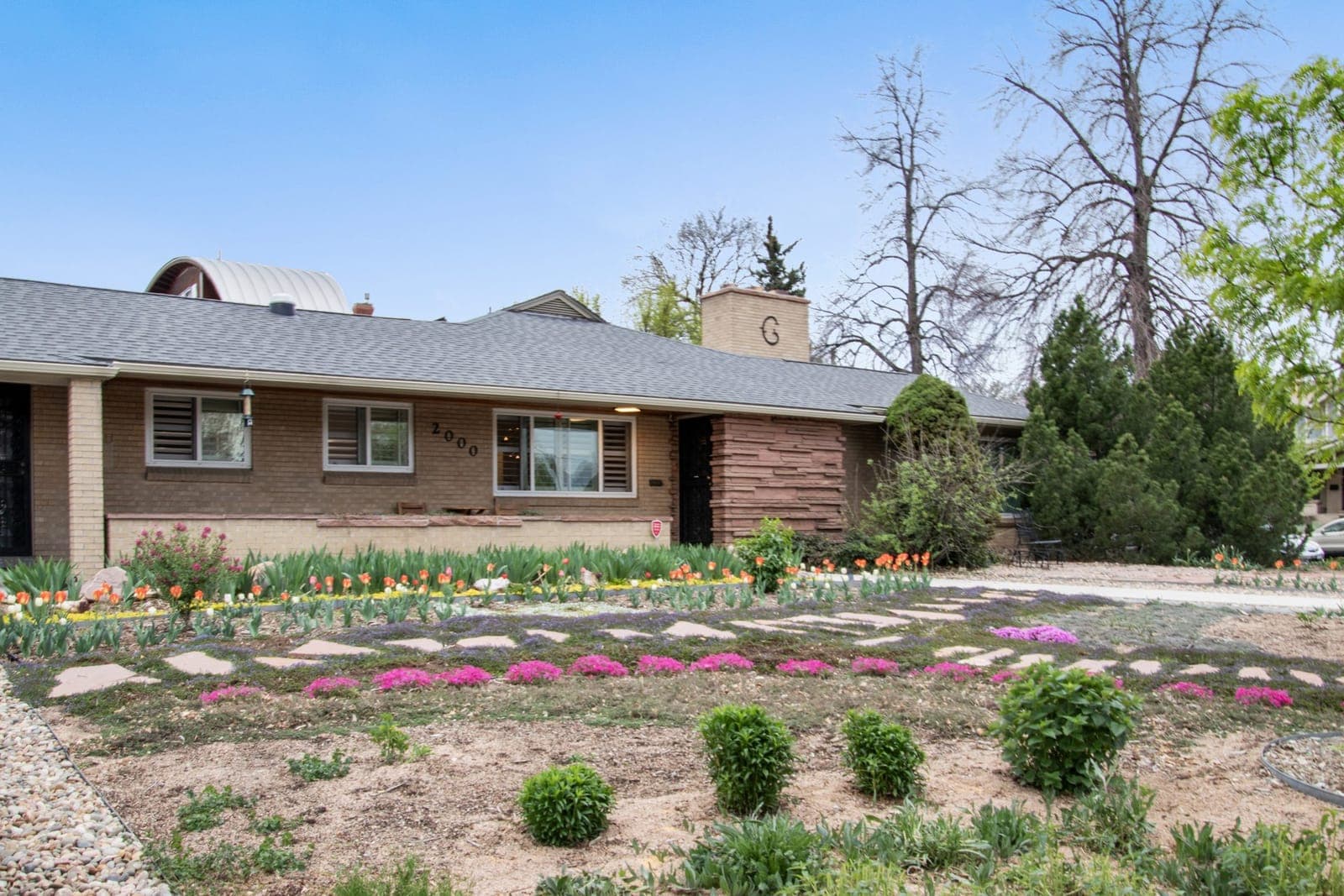
Property photographs provide visual context. Confirm dimensions, condition, and any proposed use from the records and an on-site review.
Landscape at a Glance
- 80+ species and named cultivars
- March through October bloom season
- Official Monarch Waystation
- Efficient drip irrigation
- Three years to establish
- Colorado native and climate-adapted plants
- Designed for pollinators and birds
A Garden Designed in Layers
More than 80 species in bloom
The garden holds more than 80 species and named cultivars that bloom from March through October, providing nearly continuous color. Evergreen trees and shrubs add year-round structure and interest. As one group of plants finishes blooming, another begins, creating evolving textures, colors, and forms throughout the growing season rather than a single burst of bloom.
A neighborhood destination
Located 1.4 miles from the Denver Botanic Gardens, the landscape has become something of a neighborhood destination and an informal demonstration of what a thoughtfully designed Colorado xeriscape can become over time. Neighbors frequently stop to admire the garden, and a team from a nearby healthcare office affectionately described it as "our daily dose of joy." On more than one occasion, drivers have rolled down their windows simply to compliment the landscape.
Built for pollinators and birds
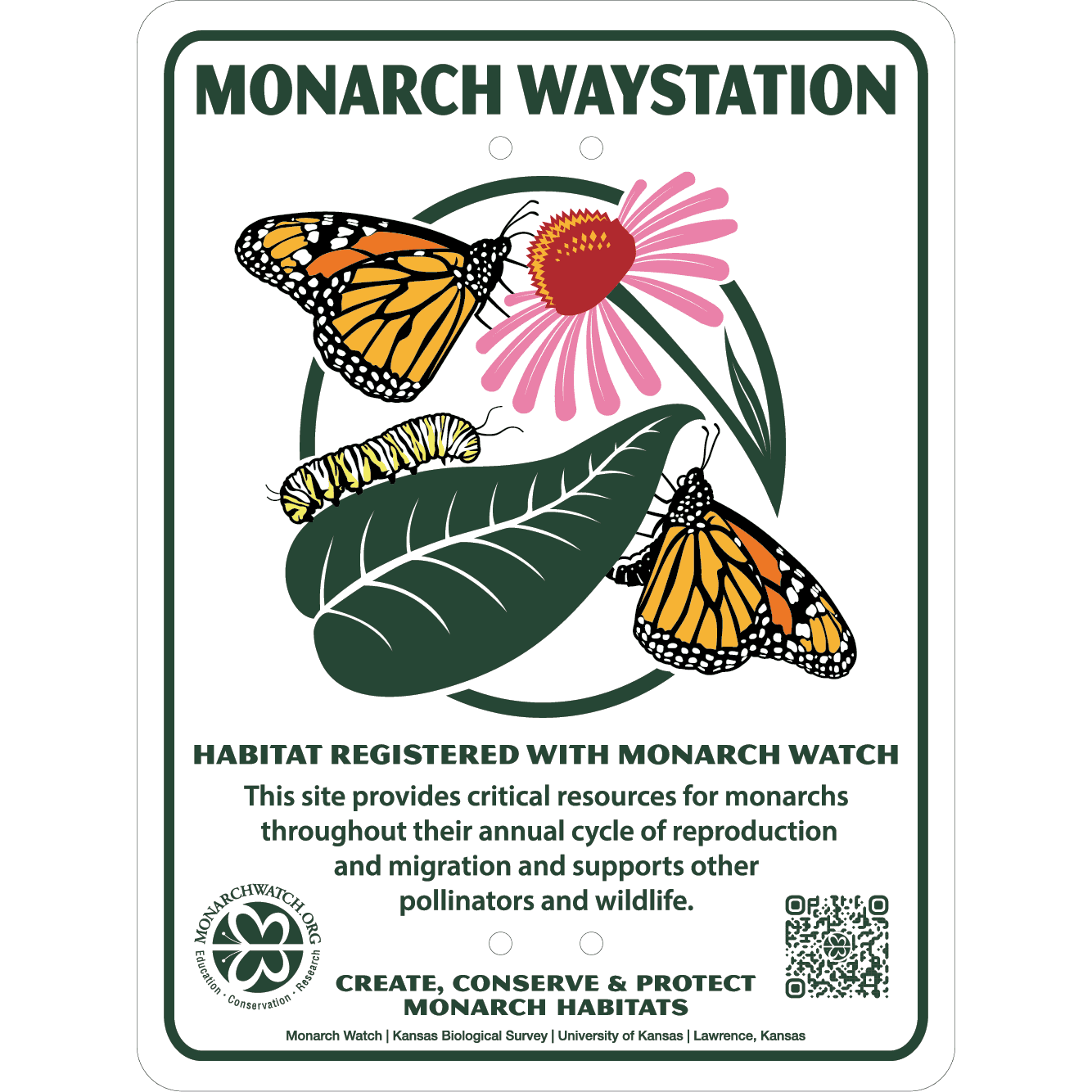
The landscape combines efficient drip irrigation with climate-appropriate plantings that significantly reduce water use while supporting native bees, butterflies including monarchs, hummingbirds, songbirds, and other beneficial pollinators. The yard has been recognized as an official Monarch Waystation by the Monarch Watch organization. Throughout the seasons, the garden provides nectar, pollen, seeds, and shelter for a wide variety of beneficial wildlife, making it as vibrant with life as it is with color.
The goal was never simply to replace lawn with drought-tolerant plants, but to create a landscape that demonstrates how beauty, biodiversity, habitat, and water conservation can coexist in a Colorado garden.
The Value of an Established Xeriscape
Three growing seasons, already done
One of the greatest advantages of purchasing an established xeriscape is avoiding the years of grass removal, solarization, planning, planting, and patient care required for it to reach maturity. Most waterwise landscapes require approximately three growing seasons before they develop the layered, full appearance envisioned by the original design. This landscape has reached that stage and is ready to be enjoyed immediately.
Once established, the landscape requires significantly less irrigation and routine maintenance than a traditional lawn while continuing to increase in beauty each season.
A place to slow down
More than simply landscaping, this garden was created as a place to slow down, observe the changing seasons, support local wildlife, and demonstrate that Colorado landscapes can be both environmentally responsible and extraordinarily beautiful. It offers the next homeowner the rare opportunity to enjoy a mature xeriscape that would take years to recreate.
Drip irrigation
The landscape is supported by efficient drip irrigation, which delivers water directly to plant roots and reduces waste compared with overhead spray. Drip systems suit water-wise gardens well, but they still require seasonal adjustment, maintenance, and winterization.
Outdoor Features
Seating areas
The landscape includes outdoor seating areas that extend the home's livable space into the garden. These spaces connect the interior to the outdoors, in keeping with the home's Mid-Century Modern sensibility. They make the yard a place to gather rather than simply a green border, and they are part of what gives the property its indoor-outdoor character.
Fire pit
A fire pit area provides a focal point for outdoor gathering, particularly in the cooler shoulder seasons that Denver's climate brings. It adds function to the garden beyond planting and helps the outdoor space feel usable across more of the year.
Water feature
A water feature adds sound and movement to the garden and serves as a visual anchor within the water-wise plantings. When maintained, it contributes to the layered, intentional feel of the landscape.
Plant Species and Cultivars Found in This Landscape
The full plant list
The garden's palette spans Colorado natives, climate-adapted perennials, ornamental grasses, groundcovers, bulbs, and shrubs:
- Anise Hyssop (Agastache foeniculum)
- Aspen Fleabane (Erigeron speciosus)
- Basket-of-Gold (Aurinia saxatilis)
- Blanket Flower (Gaillardia aristata)
- Black-Eyed Susan (Rudbeckia hirta)
- Blue Flax (Linum lewisii)
- Blue Grama Grass (Bouteloua gracilis)
- Blue Harebell (Campanula rotundifolia)
- Blue Spruce Stonecrop (Sedum reflexum 'Blue Spruce')
- Bugleweed (Ajuga reptans)
- Butterfly Milkweed (Asclepias tuberosa)
- California Poppy (Eschscholzia californica)
- Canada Goldenrod (Solidago canadensis)
- Cape Plumbago (Plumbago auriculata)
- Caucasian Stonecrop (Phedimus spurius)
- Cheddar Pink (Dianthus gratianopolitanus)
- Chocolate Flower (Berlandiera lyrata)
- Common Evening Primrose (Oenothera biennis)
- Creeping Jenny (Lysimachia nummularia)
- Creeping Sage (Salvia sonomensis)
- Crystal River Speedwell (Veronica 'Crystal River')
- European Pasque Flower (Pulsatilla vulgaris)
- Faassen's Catmint (Nepeta x faassenii)
- False Indigo (Baptisia australis)
- Firecracker Bush (Bouvardia ternifolia)
- Firecracker Penstemon (Penstemon eatonii)
- Furman's Red Salvia (Salvia x sylvestris 'Furman's Red')
- Greater Periwinkle (Vinca major)
- Ice Plants (Delosperma spp.), including 'Red Mountain', 'Lavender Ice', and 'Table Mountain'
- Iris (multiple Iris varieties)
- Lady's Mantle (Alchemilla mollis)
- Lanceleaf Coreopsis (Coreopsis lanceolata)
- Lemon Thyme (Thymus x citriodorus)
- Little Trudy Catmint (Nepeta 'Little Trudy')
- Lilacs (multiple Syringa varieties)
- May Night Salvia (Salvia nemorosa 'May Night')
- McKana's Giant Columbine (Aquilegia 'McKana Hybrids')
- Marnier's Kalanchoe (Kalanchoe marnieriana)
- Mexican Bush Sage (Salvia leucantha)
- Mexican Feather Grass (Nassella tenuissima)
- Missouri Evening Primrose (Oenothera macrocarpa)
- Mock Orange (Philadelphus coronarius or hybrids)
- Native Lavender Bee Balm (Monarda fistulosa var. menthifolia)
- New York Aster (Symphyotrichum novi-belgii)
- One-seed Juniper (Juniperus monosperma)
- ORANGE CARPET California Fuchsia (Epilobium canum 'Orange Carpet')
- Ornamental Alliums (Allium spp.)
- Periwinkle (Vinca minor)
- Phenomenal Lavender (Lavandula x intermedia 'Phenomenal')
- Pincushion Flower (Scabiosa columbaria)
- Pink Chintz Creeping Thyme (Thymus serpyllum 'Pink Chintz')
- Pink Garden Phlox (Phlox paniculata)
- Prairie Coneflower (Ratibida columnifera)
- Prairie Verbena (Glandularia bipinnatifida)
- Prick-madam (Petrosedum rupestre)
- Purple Coneflower (Echinacea purpurea)
- Purple Dome Aster (Symphyotrichum novae-angliae 'Purple Dome')
- Purple Ice Plant (Delosperma cooperi)
- Red Creeping Thyme (Thymus praecox 'Coccineus')
- Rocky Mountain Columbine (Aquilegia coerulea)
- Rocky Mountain Penstemon (Penstemon strictus)
- Rose Marvel Salvia (Salvia nemorosa 'Rose Marvel')
- Rozanne Hardy Geranium (Geranium 'Rozanne')
- Russian Sage (Salvia yangii)
- Scarlet Gilia (Ipomopsis aggregata)
- Shasta Daisy (Leucanthemum x superbum)
- Showy Fleabane (Erigeron speciosus)
- Showy Milkweed (Asclepias speciosa)
- Showy Stonecrop (Hylotelephium spectabile)
- Smooth Aster (Symphyotrichum laeve)
- Sneezewort (Achillea ptarmica)
- Snowmass Speedwell (Veronica repens 'Snowmass')
- Soapwort (Saponaria officinalis)
- Sonoran Sunset Hyssop (Agastache cana 'Sinning')
- Spiked Speedwell (Veronica spicata)
- Stonecrop (Sedum spp.)
- Summer Savory (Satureja hortensis)
- Switchgrass (Panicum virgatum)
- Turkish Speedwell (Veronica liwanensis)
- Tulips (numerous Tulipa varieties)
- Walker's Low Catmint (Nepeta x faassenii 'Walker's Low')
- Western Snowberry (Symphoricarpos occidentalis)
- Wild Bergamot (Monarda fistulosa)
- Windflower (Anemone multifida)
- Woodland Sage (Salvia nemorosa)
- Woolly Thyme (Thymus pseudolanuginosus)
- Yarrow (Achillea millefolium)
- Yellow Columbine (Aquilegia chrysantha)
Learn More About Colorado Waterwise Landscaping
Resources and inspiration
To learn more about Colorado waterwise landscaping and the organizations that inspired this landscape, visit:
Garden evidence and care questions
Review existing evidence before assuming how the landscape will perform for a future owner.
See the mature landscape and recognition record
Photographs show the existing exterior landscape. Review the Monarch Waystation documentation alongside the property materials rather than inferring plant inventory or establishment dates.
Ask for maintenance evidence
Request any available care, irrigation, and seasonal-maintenance records, then inspect the garden during a showing. No numerical water or cost savings are assumed.
Frequently asked questions
What is a xeriscape?
A landscape designed to reduce supplemental water use through low-water plants, efficient irrigation, and reduced lawn, while still offering seasonal interest.
How many plants are in the garden at 2000 E 21st Ave?
More than 80 species and named cultivars, blooming from March through October, with evergreen trees and shrubs for year-round structure.
Is the garden a Monarch Waystation?
Yes. The yard has been recognized as an official Monarch Waystation by the Monarch Watch organization.
How long does a xeriscape take to establish?
Most waterwise landscapes need approximately three growing seasons to develop their layered, full appearance. This landscape has reached that stage.
Is a xeriscape maintenance-free?
No. Once established it requires significantly less irrigation and routine maintenance than a traditional lawn, but it is seasonal and benefits from ongoing care.
Authorship and evidence
How this guide is grounded
Presented by Rick Janson, the listing agent for 2000 E 21st Avenue. Property-specific statements are checked against MLS #8398506, the retained 1951 instructions to the contractor, and the property's photographs and records. Location, market, and regulatory details use the references below and should be reconfirmed when they matter to a decision.
Last updated
Evidence and sources
primary
MLS #8398506
Current listing identifier and status: For Sale.
primary
151 captioned property photographsRoom-by-room visual evidence served directly from this website.
primary
1951 instructions to the contractorThe retained primary document supporting the home's design attribution.
reference
Monarch Watch — Monarch Waystation ProgramReference linked within this guide.
reference
Resource CentralReference linked within this guide.
reference
Plant SelectReference linked within this guide.
reference
Colorado Waterwise — Xeriscape ColoradoReference linked within this guide.
reference
CSU Extension — Garden and LandscapeReference linked within this guide.
reference
Exterior xeriscape galleryReference linked within this guide.
reference
Monarch-friendly landscapeReference linked within this guide.
reference
Schedule a private showingReference linked within this guide.
reference
Denver Architecture FoundationDenver architectural context for Joe Lort Jr. and the Cummings House.
official
History ColoradoColorado architectural-history context.
Questions about this property?
to discuss how the xeriscape garden applies to 2000 E 21st Ave.
Book a virtual coffee with Rick Janson